







While good oral care may help reduce bacteria and debris, many people with excellent brushing and flossing habits still develop tonsil stones.
Anatomy often plays a much larger role than hygiene.
Therefore, developing tonsil stones should not be viewed as a sign that someone is neglecting their oral health.
Common Symptoms of Tonsil Stones
Some people have tonsil stones without experiencing any symptoms.
Others develop symptoms that range from mild annoyance to significant discomfort.
Persistent Bad Breath
Bad breath is the most common complaint.
Bacteria trapped within tonsil stones produce volatile sulfur compounds.
These sulfur compounds create the unpleasant odor often associated with stones.
In many cases, bad breath improves immediately after stone removal.
Feeling Something Is Stuck
Many individuals describe a sensation of having a foreign object lodged in the throat.
Even a small stone can create this uncomfortable feeling when positioned in a sensitive area.
Sore Throat
Larger stones may irritate surrounding tissues.
This irritation can lead to mild soreness or throat discomfort.
Ear Pain
The nerves serving the tonsils share pathways with the ears.
As a result, tonsil irritation may occasionally cause referred ear pain.
The ear itself is healthy, but discomfort is felt there due to shared nerve connections.
Difficulty Swallowing
Large stones may interfere with swallowing or create a sensation that swallowing is difficult.
Visible White Spots
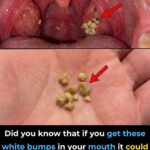
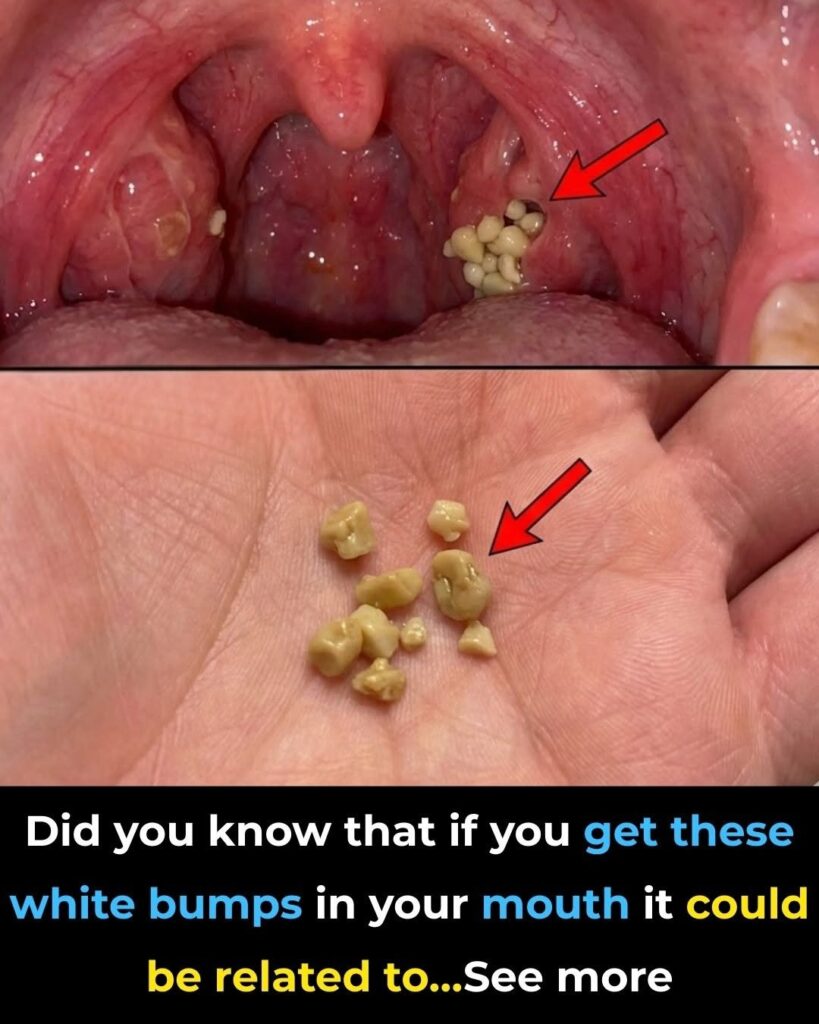
Many people first notice stones when they see white or yellow spots on their tonsils.
These spots can sometimes be mistaken for:
- Strep throat
- Pus
- Infection
- Food debris
When Tonsil Stones Are Not the Cause
Not every white spot on the tonsils is a tonsil stone.
Other conditions that may cause similar appearances include:
- Tonsillitis
- Strep throat
- Oral infections
- Leukoplakia
- Certain viral illnesses
If symptoms include fever, significant pain, or swollen lymph nodes, medical evaluation is important.
Safe Ways to Remove Tonsil Stones
Many stones eventually dislodge on their own.
However, some individuals prefer to remove visible stones when symptoms develop.
The key is using gentle, safe methods.
Warm Salt Water Gargles
One of the safest approaches involves gargling warm salt water.
Salt water can:
- Reduce inflammation
- Loosen debris
- Improve comfort
- Support oral hygiene
Mix approximately half a teaspoon of salt into a cup of warm water and gargle several times daily.
Vigorous Gargling
Forceful gargling with plain water can sometimes dislodge small stones naturally.
Because it carries little risk, it is often worth trying before other methods.
Coughing
Many stones become loose enough to emerge during coughing.
Some people discover stones only after they unexpectedly cough them out.
Low-Pressure Water Irrigation
A water flosser set to its lowest setting may help flush out debris.
The stream should be directed gently around the stone rather than forcefully into the crypt.
Using excessive pressure can injure the tonsils.
Cotton Swab Removal
If a stone is easily visible and accessible, a cotton swab may help dislodge it.
The key word is gently.
The goal is to apply light pressure beside the stone rather than poking directly into the tonsil.
If the stone does not move easily, stop.
Forcing removal increases the risk of injury.
What You Should Never Do
Many complications occur because people become too aggressive during removal attempts.
Avoid:
Metal Tools
Never use:
- Tweezers
- Bobby pins
- Dental picks
- Needles
These objects can puncture delicate tissue and introduce infection.
Fingernails
Fingernails contain bacteria and may cause small tears in the tonsils.
High-Pressure Irrigation
Strong water streams can drive debris deeper into crypts or damage tissue.
Repeated Forceful Probing
Persistent poking often causes more harm than the stone itself.
If removal becomes difficult, professional assistance is safer.
How to Prevent Tonsil Stones
Although no method can completely eliminate the possibility of tonsil stones, several strategies may significantly reduce recurrence.
Maintain Excellent Oral Hygiene
Daily brushing and flossing help reduce bacterial buildup.
Pay particular attention to:
- Gum lines
- Back teeth
- Tongue surface
Scrape Your Tongue
Tongue scraping removes bacteria that contribute to stone formation and bad breath.
Many ENT specialists consider tongue cleaning one of the most effective preventive measures.
Stay Hydrated
Adequate hydration supports saliva production.
More saliva means better natural cleansing of the mouth and throat.
Address Post-Nasal Drip
If allergies or sinus problems contribute to mucus buildup, treatment may help reduce stone formation.
Options may include:
- Saline nasal rinses
- Allergy management
- Humidification
Use Alcohol-Free Mouthwash
Alcohol-containing products may worsen dry mouth.
Alcohol-free options can help reduce bacterial growth while preserving moisture.
Avoid Smoking
Smoking irritates the throat and contributes to dry mouth.
Reducing or eliminating tobacco use may lower stone frequency.
When to See an ENT Specialist
Most tonsil stones can be managed at home.
However, certain situations warrant evaluation by an Ear, Nose, and Throat specialist.
Seek medical attention if you experience:
- Frequent recurring stones
- Significant pain
- Difficulty swallowing
- Bleeding
- Fever
- Enlarged tonsils
- Persistent bad breath despite treatment
An ENT can confirm the diagnosis and discuss additional treatment options.
Advanced Treatment Options
For people with persistent problems, professional interventions may provide relief.
Cryptolysis
Laser or radiofrequency cryptolysis reduces the depth of tonsil crypts.
By smoothing the surface, fewer areas remain available for debris accumulation.
Many patients experience substantial improvement after treatment.
Tonsillectomy
The only definitive way to eliminate tonsil stones completely is to remove the tonsils.
Because tonsillectomy is surgery, it is generally reserved for severe cases.
Recovery can be uncomfortable, and surgery carries risks.
For this reason, tonsillectomy is usually considered only when symptoms significantly affect quality of life.
The Truth About Getting Rid of Tonsil Stones Forever
Many online articles promise permanent solutions.
The reality is more nuanced.
Unless the tonsils are removed entirely, tonsil stones can potentially return.
However, this does not mean recurrence is inevitable.
Many people dramatically reduce their frequency through:
- Better hydration
- Tongue cleaning
- Oral hygiene
- Managing allergies
- Reducing dry mouth
For some, stones become rare occurrences rather than regular frustrations.
Living Comfortably With Tonsil Stones
Perhaps the most important thing to remember is that tonsil stones are common and generally harmless.
They may be annoying.
They may occasionally be embarrassing.
But they are not dangerous.
They are simply the result of normal anatomy interacting with bacteria, saliva, mucus, and everyday life.
Understanding how they form removes much of the anxiety surrounding them.
Rather than fighting aggressively against your body’s anatomy, gentle management and consistent prevention often provide the best results.
Final Thoughts
Tonsil stones may seem mysterious, but they are actually one of the most common and harmless conditions affecting the throat.
They form when food particles, bacteria, mucus, and dead cells become trapped in the natural folds of the tonsils and gradually harden. While they can cause bad breath, throat irritation, and discomfort, they rarely pose any serious health risk.
The safest approach combines prevention with gentle removal techniques. Good oral hygiene, tongue cleaning, hydration, and managing post-nasal drip can significantly reduce recurrence for many people.
Most importantly, tonsil stones are not a reflection of poor hygiene, poor health, or personal failure. They are simply a byproduct of normal anatomy.
For most individuals, relief is absolutely achievable—even if permanent elimination is not always realistic.
With patience, proper care, and a little understanding, tonsil stones can become a minor inconvenience rather than a major concern.
Leave a Reply