






You are standing in front of the mirror one morning when you notice it.
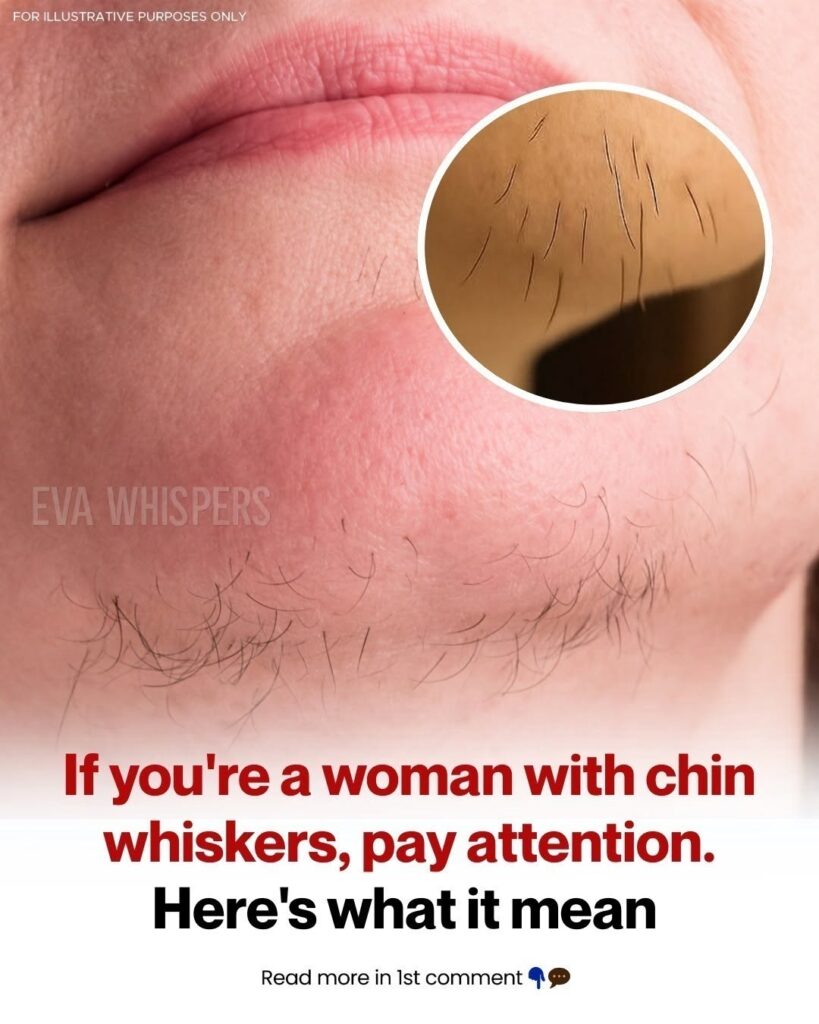
A single dark hair on your chin.
You pluck it and move on with your day. Then a few days later, it returns. Perhaps another one appears nearby. Before long, you begin wondering whether this is normal, whether something is wrong, or whether your body is trying to tell you something important.
If this sounds familiar, you are far from alone.
Millions of women experience chin hair growth at some point in their lives. Yet despite how common it is, many feel embarrassed or confused when it happens. Social expectations often create the impression that women should have completely smooth, hair-free faces. Real life tells a different story.
The truth is that facial hair in women is extremely common. In many cases, it is a perfectly normal part of aging, genetics, and hormonal changes. Sometimes, however, new or excessive facial hair can signal an underlying health issue that deserves attention.
Understanding why chin whiskers appear can help replace anxiety with knowledge and empower you to make informed decisions about your health.
Understanding Hair Growth in Women
Hair growth is influenced by a complex interaction of genetics, hormones, age, and overall health.
Every person has hair follicles covering most of their body. The difference lies in how those follicles respond to hormones.
Two important hormone groups play a major role:
- Estrogen
- Androgens (including testosterone)
Although testosterone is often thought of as a male hormone, women naturally produce it too. Under normal circumstances, estrogen helps keep facial hair soft, light, and fine.
However, when hormone levels change or hair follicles become more sensitive to androgens, those tiny hairs may transform into thicker, darker strands known as terminal hairs.
This is why a single chin hair can sometimes seem to appear overnight.
The follicle was often already there. It simply became more active.
The Most Common Cause: Aging and Menopause
For many women, chin whiskers become noticeable during their 40s, 50s, and beyond.
This is usually connected to hormonal changes associated with perimenopause and menopause.
As women age, estrogen levels gradually decline.
Testosterone levels decline too, but often at a slower rate.
The result is a shift in the hormone balance.
Even though testosterone levels may remain within the normal female range, the relative decrease in estrogen allows androgen effects to become more noticeable.
This can lead to:
- Chin hair
- Jawline hair
- Upper lip hair
- Coarser facial hair texture
Doctors generally consider this a normal part of aging.
Just as gray hair and wrinkles become more common with time, so can occasional chin whiskers.
Genetics Play a Bigger Role Than You Think
Sometimes the explanation is simply family history.
If your mother, grandmother, sisters, or aunts experienced facial hair growth, you are more likely to experience it too.
Hair follicles inherit traits just like eye color and hair texture.
Some people naturally have follicles that respond more strongly to normal hormone levels.
This is particularly common among women with ancestry from:
- Mediterranean regions
- Middle Eastern backgrounds
- South Asian populations
- Latin American communities
In these groups, facial hair growth may be completely normal and unrelated to any medical condition.
Genetics often determine:
- Hair thickness
- Hair color
- Hair growth patterns
- Hormone sensitivity
This means two women with identical hormone levels may experience very different amounts of facial hair.
Polycystic Ovary Syndrome (PCOS)
When facial hair appears earlier in life or increases significantly, healthcare providers often consider Polycystic Ovary Syndrome, commonly known as PCOS.
PCOS is one of the most common hormonal disorders affecting women.
It involves increased androgen production by the ovaries.
Common symptoms include:
- Irregular periods
- Absent periods
- Acne
- Weight gain
- Difficulty losing weight
- Scalp hair thinning
- Excess facial hair
Facial hair associated with PCOS often appears on:
- The chin
- Upper lip
- Jawline
- Neck
The condition affects millions of women worldwide.
Fortunately, treatment options are available and can help manage symptoms effectively.
Insulin Resistance and Facial Hair
Many people are surprised to learn that blood sugar regulation can influence facial hair growth.
Insulin resistance occurs when cells become less responsive to insulin.
As a result, the body produces more insulin to compensate.
High insulin levels can stimulate the ovaries to produce additional androgens.
These increased androgen levels may contribute to:
- Chin hair growth
- Acne
- Weight gain
- Irregular cycles
Insulin resistance commonly occurs in:
- PCOS
- Prediabetes
- Type 2 diabetes
- Metabolic syndrome
Addressing insulin resistance often helps improve hormonal balance over time.
Medications That May Trigger Chin Hair
Certain medications can contribute to facial hair growth.
Common examples include:
Corticosteroids
Medications such as prednisone may influence hormone balance and hair growth.
Testosterone Therapy
Any form of testosterone supplementation may stimulate facial hair follicles.
DHEA Supplements
These supplements may increase androgen activity in some individuals.
Minoxidil
Although commonly used for scalp hair growth, it may occasionally stimulate facial hair growth.
Certain Prescription Medications
Some anti-seizure medications and immunosuppressants have been associated with increased hair growth.
If chin hair appears shortly after starting a new medication, discussing the change with your healthcare provider may be helpful.
Can Stress Cause Chin Hair?
Stress alone rarely causes dramatic facial hair growth.
However, chronic stress affects hormone regulation throughout the body.
Long-term stress increases cortisol production.
Elevated cortisol may indirectly influence:
- Estrogen levels
- Testosterone balance
- Insulin sensitivity
- Ovulation patterns
For individuals already predisposed to hormonal imbalances, stress may amplify existing symptoms.
While stress reduction is unlikely to eliminate facial hair completely, it may support overall hormonal health.
Rare Hormonal Conditions
Occasionally, excessive facial hair may be linked to less common endocrine disorders.
These include:
Cushing’s Syndrome
This condition involves excessive cortisol production.
Symptoms may include:
- Weight gain
- Facial rounding
- Easy bruising
- Facial hair growth
Congenital Adrenal Hyperplasia
Certain forms of this genetic condition can increase androgen production.
Androgen-Secreting Tumors
These are extremely rare.
However, they can cause sudden and dramatic increases in facial hair growth.
Doctors may investigate these possibilities when facial hair develops rapidly or is accompanied by severe hormonal symptoms.
When Chin Hair Is Usually Nothing to Worry About
Most women do not need to panic over an occasional chin whisker.
Generally reassuring situations include:
- One or two isolated hairs
- Gradual appearance with age
- Family history of facial hair
- No additional symptoms
- Slow progression over years
In these cases, facial hair is often simply part of normal biology.
When You Should Talk to a Healthcare Provider
Although chin hair is often harmless, certain situations deserve medical evaluation.
Consider speaking with a healthcare professional if you notice:
Rapid Hair Growth
Sudden increases in facial hair may indicate hormonal changes.
Irregular Menstrual Cycles
When facial hair appears alongside menstrual irregularities, hormonal testing may be helpful.
Acne and Oily Skin
These symptoms can point toward androgen excess.
Scalp Hair Loss
The combination of facial hair growth and scalp thinning may suggest hormonal imbalance.
Deepening Voice
Voice changes warrant prompt evaluation.
Increased Muscle Mass
Unexpected muscle development alongside facial hair growth may indicate significant androgen elevation.
Unexplained Weight Changes
Hormonal and metabolic disorders can affect both weight and hair growth.
Early evaluation often provides reassurance and helps identify treatable conditions.
Hair Removal Options
Whether to remove chin hair is a personal choice.
There is no medical requirement to remove it.
However, many women prefer to manage facial hair for cosmetic reasons.
Fortunately, several options exist.
Tweezing
Tweezing remains one of the most popular methods.
Advantages:
- Inexpensive
- Precise
- Immediate results
Disadvantages:
- Temporary
- Can cause ingrown hairs
- Requires ongoing maintenance
Shaving
Despite common myths, shaving does not make hair grow back thicker.
Advantages:
- Fast
- Easy
- Painless
Disadvantages:
- Frequent maintenance
- Stubble may appear quickly
Waxing
Waxing removes hair from the root.
Advantages:
- Longer-lasting results
- Smooth finish
Disadvantages:
- Potential irritation
- Temporary discomfort
Threading
Threading offers precise hair removal without chemicals.
Advantages:
- Effective
- Chemical-free
Disadvantages:
- Can be uncomfortable
- Requires skill
Long-Term Hair Reduction Options
Laser Hair Removal
Laser treatments target hair follicles using concentrated light energy.
Benefits include:
- Significant hair reduction
- Long-lasting results
- Improved convenience
Multiple treatments are typically required.
Electrolysis
Electrolysis remains the only FDA-recognized permanent hair removal method.
A tiny probe destroys individual follicles.
Advantages:
- Permanent results
- Effective on all skin tones
Disadvantages:
- Time-consuming
- Multiple sessions needed
Can Natural Remedies Help?
The internet is filled with claims about natural facial hair treatments.
Many lack strong scientific support.
However, a few approaches may indirectly help when hormonal imbalance is involved.
Healthy Weight Management
For women with insulin resistance or PCOS, weight management may help reduce androgen levels.
Balanced Nutrition
A diet emphasizing:
- Vegetables
- Fruits
- Lean proteins
- Whole grains
supports overall hormonal health.
Physical Activity
Regular exercise improves insulin sensitivity and metabolic function.
Stress Management
Meditation, yoga, deep breathing, and adequate sleep may support hormonal balance.
These strategies should be viewed as supportive tools rather than miracle cures.
Common Myths About Chin Hair
Myth: Plucking Makes Hair Grow Back Thicker
False.
Plucking does not alter the follicle’s structure.
Hair may feel coarser because of the growth cycle, not because the follicle changed.
Myth: Shaving Increases Hair Growth
False.
Shaving cuts hair at the surface and does not affect growth rate or thickness.
Myth: Chin Hair Means High Testosterone
Not necessarily.
Many women with facial hair have normal hormone levels.
Follicle sensitivity often matters more than hormone concentration.
Myth: Facial Hair Means Something Is Wrong
False.
Facial hair can be a completely normal variation of human biology.
The Emotional Side of Chin Hair
The physical aspect of facial hair is often easier to manage than the emotional aspect.
Many women feel embarrassed, frustrated, or self-conscious.
Social media, advertising, and beauty standards frequently promote unrealistic expectations.
These messages can create unnecessary shame around a perfectly natural experience.
The reality is simple:
Women grow facial hair.
Many women grow chin hair.
Many women grow chin hair regularly.
This does not make anyone less feminine, less attractive, or less healthy.
Your worth is not determined by the presence or absence of a few facial hairs.
The Bottom Line
Chin whiskers on women are extremely common and usually harmless. In many cases, they result from normal aging, genetics, or natural hormonal shifts that occur throughout life.
However, sudden or excessive facial hair growth may occasionally signal an underlying hormonal or metabolic condition such as PCOS, insulin resistance, or another endocrine disorder.
The key is paying attention to the overall picture.
An isolated chin hair is rarely a cause for concern.
But facial hair combined with irregular periods, acne, scalp hair loss, rapid weight changes, or other hormonal symptoms deserves medical attention.
Whether you choose to tweeze, shave, wax, laser, or simply leave the hair alone is entirely your decision.
The most important thing to remember is this:
A chin whisker is not a flaw.
It is simply one small expression of the fascinating, complex, and ever-changing biology that makes you human.
Leave a Reply