






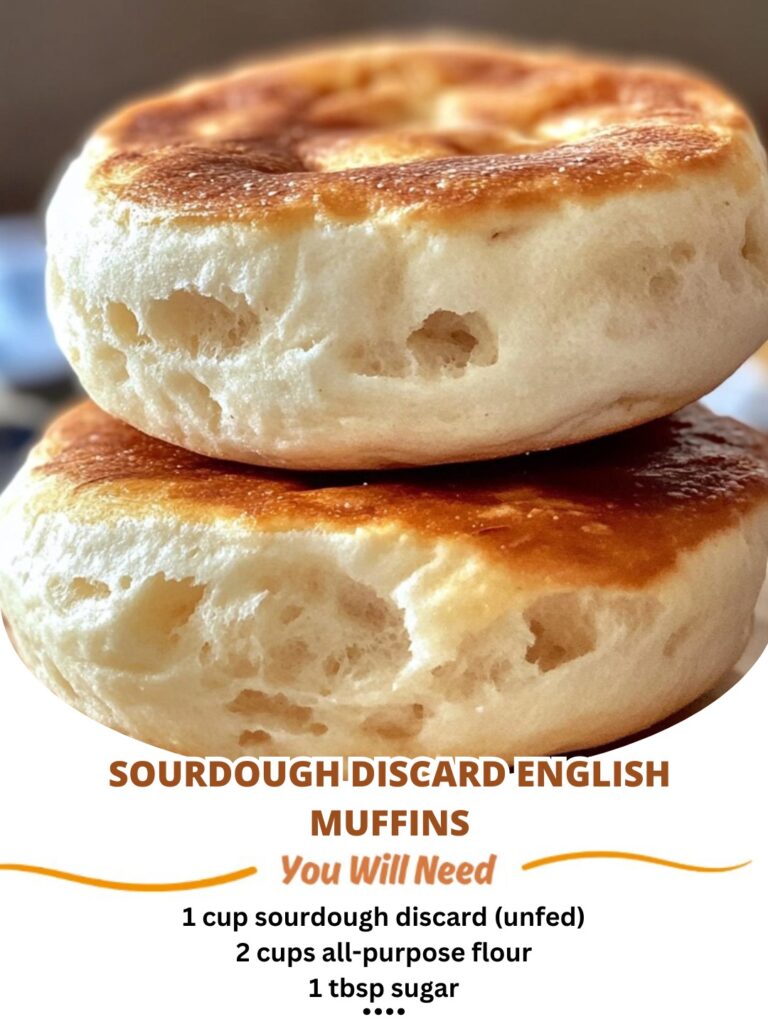
Sourdough Discard English Muffins are one of the most satisfying ways to turn leftover starter into something truly special. These muffins cook up soft and airy on the inside, lightly crisp on the outside, and full of those signature nooks and crannies that soak up butter, jam, or honey like a dream. They have just enough tang from the sourdough discard to feel interesting without overpowering whatever you choose to top them with.
What makes Sourdough Discard English Muffins so appealing is how practical and rewarding they are. Instead of throwing away unfed starter, you transform it into a freezer-friendly breakfast staple that feels homemade in the best way. The process is straightforward, the ingredients are simple, and the results rival bakery-quality muffins made right on your stovetop.
I started making these muffins during a phase when my sourdough starter was thriving and producing more discard than I wanted to waste. I wanted something more substantial than pancakes but less fussy than a full loaf of bread. The first batch surprised me. The texture was light, the flavor was gently tangy, and the smell of muffins cooking slowly on the skillet made the kitchen feel cozy and calm. Since then, this recipe has become a regular part of my sourdough routine.
Ingredients
Equipment
Method
- Bloom yeast in warm milk with sugar until foamy.
- Mix discard, yeast mixture, salt, butter, and flour to form dough.
- Knead until smooth, then rise until doubled.
- Shape into discs and let rise again.
- Cook on skillet over medium-low heat until golden and cooked through.
Nutrition
Notes
Tried this recipe?
Let us know how it was!Why Sourdough Discard English Muffins Are Worth Making
A Smart Way to Use Discard
Sourdough Discard English Muffins are a practical solution to a common sourdough problem. Discard often builds up quickly, and while it can be used in many recipes, English muffins are especially rewarding.
The discard adds flavor and contributes to a tender crumb while commercial yeast ensures reliable rise and consistent texture. This balance gives you the best of both worlds.
Texture You Cannot Get From Store-Bought
Homemade English muffins shine because of their interior. Cooking them low and slow on a skillet allows the dough to puff gently, creating airy pockets throughout.
Splitting them with a fork instead of a knife reveals those nooks and crannies that hold butter and spreads so well. Once you experience that texture, store-bought muffins feel flat by comparison.
Ingredients That Make the Difference
Sourdough Discard
The discard brings subtle tang and complexity. It does not need to be fed or bubbly, which makes this recipe convenient.
Cold discard straight from the fridge works perfectly, making it easy to use whenever you have time.
Milk and Yeast
Warm milk activates the yeast and adds richness. The sugar feeds the yeast and balances the tang of the sourdough.
Active dry yeast provides dependable lift, ensuring the muffins rise well even though the discard itself is unfed.
Flour, Salt, and Butter
All-purpose flour creates structure without heaviness. Salt balances flavor, while optional melted butter adds softness and richness to the crumb.
The dough should feel soft and slightly tacky, never dry.
Cornmeal for That Classic Finish
Cornmeal dusting is optional, but it adds texture and prevents sticking. It also gives the muffins that familiar look and gentle crunch on the outside.
How to Make Sourdough Discard English Muffins Step by Step
Activating the Yeast
Blooming the yeast in warm milk with sugar ensures it is active and ready to work. Foam on the surface is a sign everything is on track.
This step sets the foundation for a good rise.
Mixing and Kneading the Dough
Combining discard, yeast mixture, salt, and flour creates a soft dough. Kneading develops gluten, which helps the muffins rise and hold their shape.
The dough should become smooth and elastic but still slightly soft to the touch.
First Rise for Flavor and Structure
Letting the dough rise until doubled allows flavor to develop and gluten to relax. A warm, draft-free spot works best.
This rise is essential for light, airy muffins.
Shaping and Second Rise
Dividing the dough evenly ensures consistent cooking. Shaping into discs and letting them rest allows the muffins to puff gently.
The second rise improves texture and helps create that classic interior.
Cooking Low and Slow
Cooking on medium-low heat is key. Too much heat browns the outside before the inside cooks through.
Turning the muffins carefully ensures even cooking and a golden finish on both sides.
Cooling and Splitting
Cooling slightly before splitting helps the structure set. Using a fork instead of a knife preserves the interior texture.
Flavor Variations to Try
Savory Add-Ins
Chopped herbs, shredded cheese, or garlic powder turn these into savory muffins perfect for breakfast sandwiches.
Everything bagel seasoning adds bold flavor and crunch.
Sweet Options
A touch of honey or maple syrup in the dough creates lightly sweet muffins that pair well with jam or nut butter.
Dried fruit can be folded in for a breakfast-friendly twist.
Seeded Crust
Rolling the shaped muffins in sesame seeds, poppy seeds, or mixed seeds adds texture and visual appeal.
Gluten-Free Experiments
A gluten-free flour blend with xanthan gum can work, though texture will differ slightly. Cooking gently is especially important.
Tips for the Best Sourdough Discard English Muffins
Be Patient With the Heat
Low heat is essential. Rushing leads to burnt outsides and undercooked centers.
Do Not Skip the Second Rise
This rest gives the muffins their lightness. Skipping it results in dense texture.
Adjust Flour Gradually
Humidity and flour type affect dough consistency. Add flour slowly to avoid dryness.
Freeze for Convenience
Once cooled, muffins freeze beautifully. Split before freezing for easy toasting straight from the freezer.
Frequently Asked Questions
Can I use discard that smells very sour?
Yes, though the flavor will be tangier. Balance with sweet toppings if needed.
Do I need a griddle?
A nonstick skillet works perfectly.
Why are my muffins flat?
The yeast may not have been active or the dough did not rise long enough.
Can I skip the yeast?
This recipe relies on yeast for structure. Without it, texture will change significantly.
How long do they keep?
They last three days at room temperature or longer frozen.
Conclusion
Sourdough Discard English Muffins are a rewarding, practical recipe that turns excess starter into something deeply satisfying. With their light texture, gentle tang, and classic nooks and crannies, they elevate everyday breakfasts and snacks with very little effort. Once you make them at home, they quickly become a staple that makes maintaining a sourdough starter even more enjoyable.
Leave a Reply