







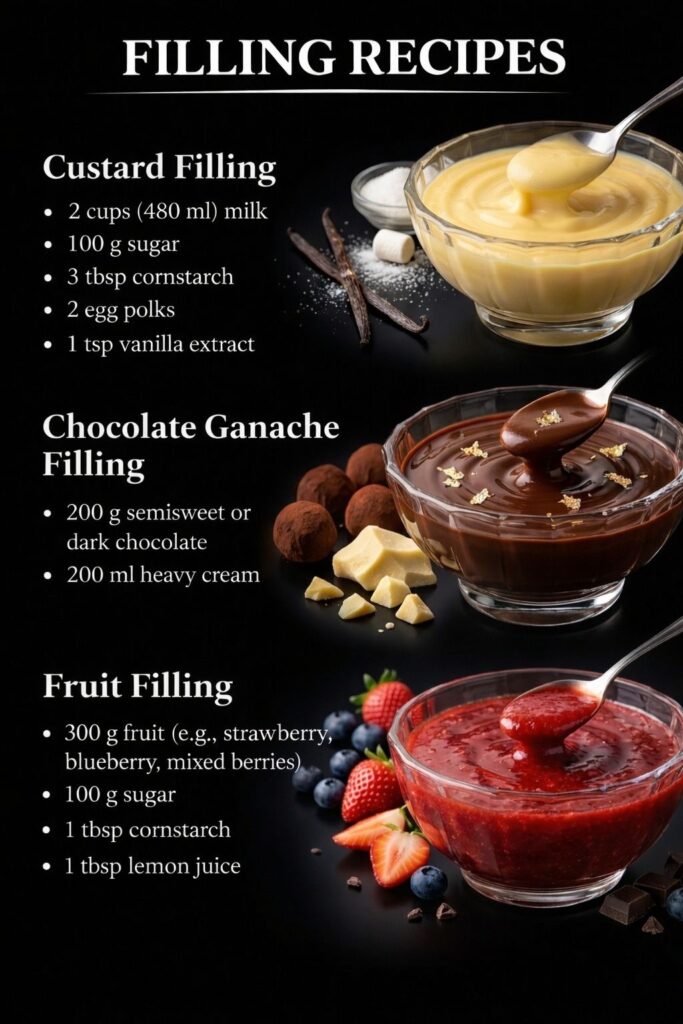
Easy Cake Fillings are the secret to turning simple cakes into rich, bakery-style desserts that feel complete and satisfying. Whether you want something creamy, chocolatey, or fruity, these three classic fillings—custard, chocolate ganache, and fruit filling—cover all the basics you need. Each one uses simple ingredients, follows easy steps, and delivers reliable results every time. With these Easy Cake Fillings, you can upgrade layer cakes, cupcakes, pastries, or even simple sponge cakes into something special without adding complicated techniques.
I remember the first time I made a layered cake that actually felt complete. Before that, I baked cakes but always felt something was missing. Then I tried adding a simple custard filling, followed by a chocolate ganache layer on another cake, and finally a homemade fruit filling for a lighter option. Each one changed the texture and flavor completely. Since then, I always keep these three fillings in mind because they transform even the simplest cake into something that feels homemade, thoughtful, and impressive.
Ingredients
Equipment
Method
- Heat milk in a saucepan until steaming.
- Whisk sugar, cornstarch, and egg yolks in a bowl.
- Slowly add warm milk while whisking, then return to heat and cook until thickened.
- Remove from heat, stir in vanilla, strain, and chill custard.
- Heat cream until simmering, pour over chopped chocolate, let sit, then stir until smooth for ganache.
- Cool ganache to desired thickness before using.
- Cook fruit, sugar, and lemon juice until softened.
- Add cornstarch slurry and cook until thick and glossy, then cool completely.
Nutrition
Notes
Tried this recipe?
Let us know how it was!Why These Cake Fillings Make a Big Difference
They add moisture and flavor instantly
Easy Cake Fillings do more than just sit between cake layers. They add moisture, richness, and contrast that improve every bite. A plain cake can sometimes feel dry or one-dimensional, but a good filling balances the texture and enhances the overall taste.
Custard filling creates a smooth, creamy layer that feels rich without being too heavy. Chocolate ganache adds a deep, indulgent flavor that pairs especially well with chocolate or vanilla cakes. Fruit filling, on the other hand, introduces brightness and a slight tang that cuts through sweetness and keeps desserts from feeling too rich.
Because each filling brings something different, you can match them with different types of cakes. For example, custard works beautifully with sponge cakes, ganache pairs well with chocolate cakes, and fruit filling complements vanilla or butter cakes. This flexibility makes these recipes extremely useful for both everyday baking and special occasions.
Perfect for beginners and advanced bakers
Another reason these Easy Cake Fillings stand out is how approachable they are. Each recipe uses simple steps and common ingredients, so even beginners can follow along without feeling overwhelmed. At the same time, these fillings are versatile enough for more advanced baking projects.
You can use custard as a base for layered desserts, ganache as both a filling and a glaze, and fruit filling as a topping or filling for pastries. Because the methods are straightforward, you can focus on building confidence while still creating impressive results.
In addition, these fillings can be prepared ahead of time. This helps reduce stress when assembling cakes or desserts. Instead of doing everything at once, you can make the filling first, store it properly, and then use it when needed. That makes baking feel more organized and enjoyable.
Creamy Custard Filling for Smooth Layers
How to achieve a silky custard texture
Custard filling is one of the most classic and versatile cake fillings. It delivers a smooth, creamy texture that spreads easily between layers and complements many types of cakes. The key to a good custard lies in careful heating and constant whisking.
Start by heating the milk in a saucepan until it becomes steaming but not boiling. While the milk warms, whisk together sugar, cornstarch, and egg yolks in a separate bowl until smooth. This mixture creates the base that thickens the custard.
Next, slowly add the warm milk into the egg mixture while whisking continuously. This step, known as tempering, prevents the eggs from cooking too quickly. Once combined, return the mixture to low heat and cook while stirring until it thickens into a smooth custard.
Remove it from the heat and stir in vanilla extract. Then strain the custard to remove any lumps and cover it before chilling. Once cooled, it becomes thick, creamy, and perfect for layering.
Tips to prevent lumps and curdling
To keep custard smooth, always cook it over low heat. High heat can cause the eggs to curdle, which creates a grainy texture. Stir constantly while cooking to ensure even thickening.
Straining the custard after cooking is another helpful step. Even if the mixture looks smooth, straining guarantees a silky finish. Also, cover the custard with plastic wrap touching the surface to prevent a skin from forming while it cools.
Custard filling works well in layered cakes, cream puffs, and pastries. Its mild sweetness allows it to pair easily with chocolate, fruit, or plain sponge cakes.

Leave a Reply