





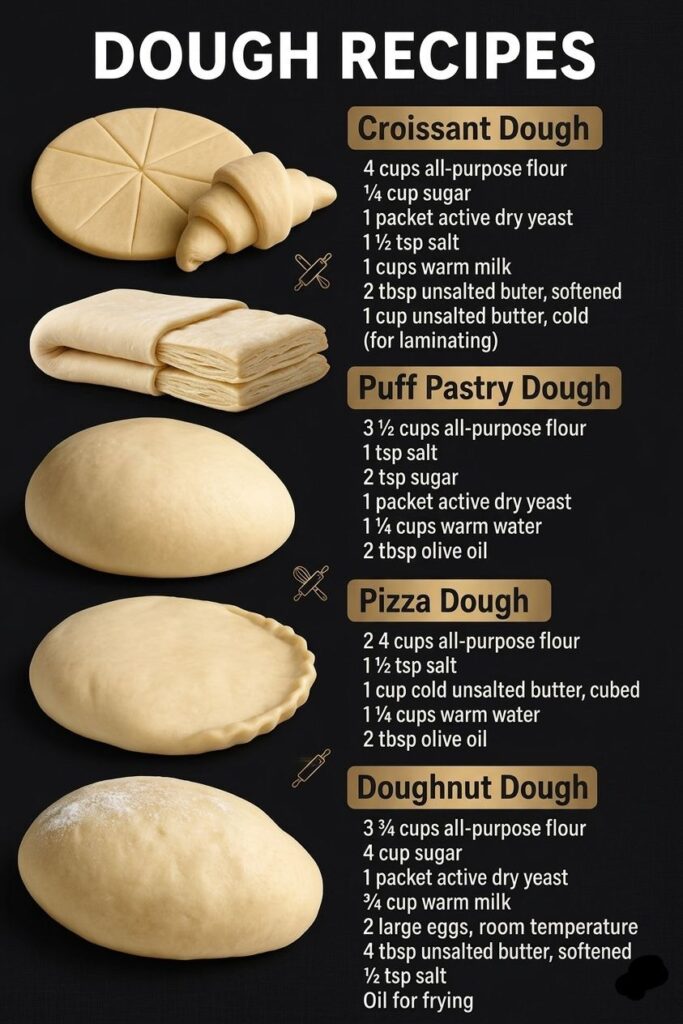
Croissant Dough Technique
Creating Soft Dough and Initial Rise
To begin, mix flour, sugar, yeast, and salt. Add warm milk and softened butter, then knead until smooth. This creates a soft dough that forms the base of your croissants.
Allow the dough to rise until doubled in size. This step develops flavor and prepares the dough for layering.
Because this dough contains yeast, proper rising is essential for achieving a light and airy texture.
Laminating for Flaky Layers
Roll the dough and place cold butter inside. Fold and roll the dough multiple times to create layers. Chill the dough between each fold to keep the butter firm.
This process, called laminating, creates the signature flaky layers of croissants. When baked, the butter melts and forms steam, separating the layers.
Finally, shape the croissants, proof them, and bake until golden. The result is a crisp exterior with a soft, layered interior.
Puff Pastry Dough Method
Preparing the Base Dough
Start by mixing flour, salt, and sugar. Add cold water and olive oil, then knead lightly until the dough comes together.
Unlike croissant dough, this dough does not rely on yeast. Instead, its texture comes entirely from the lamination process.
Allow the dough to rest before rolling. This step makes it easier to handle and prevents shrinking.
Laminating for Crisp Layers
Roll the dough and place cold butter inside. Fold and roll repeatedly, chilling between each turn. This creates multiple layers of dough and butter.
When baked, these layers puff up, creating a light and crisp texture. Puff pastry works well for both sweet and savory dishes.
Because the process requires patience, taking your time ensures the best results.
Pizza Dough and Doughnut Dough
Pizza Dough for Crispy or Chewy Crust
Dissolve yeast in warm water and let it activate. Mix flour and salt, then add the yeast mixture and olive oil. Knead until smooth and elastic.
Let the dough rise until doubled. This step gives the dough its airy structure. Once risen, roll it out and add your favorite toppings.
Bake at high temperature to achieve a crispy crust with a soft interior. Adjust thickness based on your preference for thin or thick crust.
Doughnut Dough for Soft and Fluffy Texture
Start by activating yeast in warm milk. Combine flour, sugar, and salt, then add eggs, yeast mixture, and butter. Knead into a soft dough.
Allow the dough to rise until doubled. Then roll it out and cut into shapes. Let the doughnuts proof again before frying.
Fry at the correct temperature to ensure even cooking. The result is a golden exterior with a soft and fluffy inside.
Because this dough contains enriched ingredients like eggs and butter, it produces a rich and tender texture.
Tips for Perfect Dough Every Time
Common Mistakes to Avoid
Avoid using water or milk that is too hot, as it can kill the yeast. Always measure ingredients carefully to maintain balance.
Do not skip resting or chilling steps, especially for laminated doughs. These steps are essential for achieving the correct texture.
Overworking the dough can also lead to tough results. Gentle handling often produces better outcomes.
Improving Your Results
Use high-quality butter for croissant and puff pastry dough. This enhances both flavor and texture.
Keep your workspace cool when working with laminated dough to prevent the butter from melting. For yeast-based doughs, ensure a warm environment for proper rising.
Practice plays a big role. The more you work with dough, the more comfortable and consistent your results will become.
Frequently Asked Questions
What is the difference between croissant and puff pastry dough?
Croissant dough uses yeast, making it softer, while puff pastry relies only on layers for its texture.
Can I freeze these doughs?
Yes, most doughs can be frozen and used later with proper thawing.
Why is my dough not rising?
This may happen if the yeast is inactive or the liquid was too hot.
How do I know when lamination is done?
You should see clear layers when rolling the dough.
Can I make these doughs by hand?
Yes, all these recipes can be made without special equipment.
Conclusion
Croissant Dough Puff Pastry Dough Pizza Dough Doughnut Dough recipes give you the skills to create a wide variety of baked goods from scratch. Each dough has its own technique, but once you understand the basics, the process becomes much easier.
With practice, patience, and attention to detail, you can achieve bakery-quality results at home. Whether you are making flaky pastries or soft doughnuts, these recipes provide a solid foundation for delicious creations.
Leave a Reply