




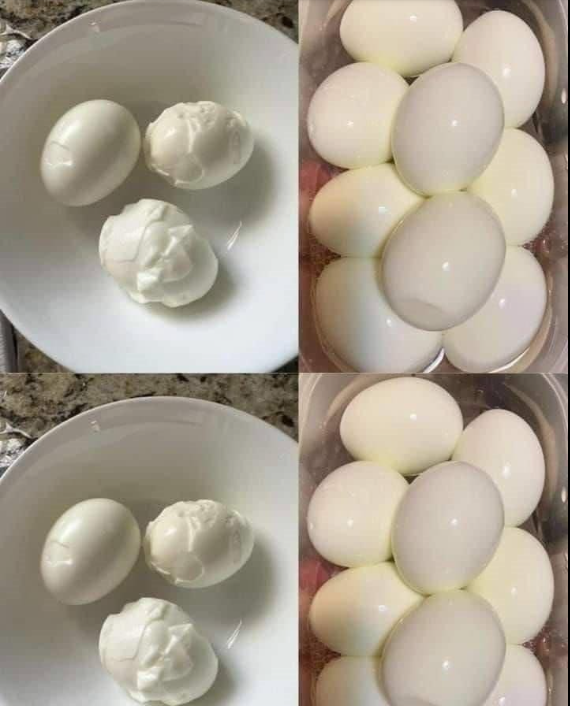
Cook’s Smart Trick for Easily Peeling Hard-Boiled Eggs solves one of the most frustrating kitchen problems with a method that actually works. If you have ever struggled with shells that cling stubbornly to the whites, leaving pitted, patchy eggs behind, this approach changes everything. Cook’s Smart Trick for Easily Peeling Hard-Boiled Eggs relies on timing, temperature, and a few science-backed steps that turn peeling into a smooth, stress-free task. Because the process stays simple and predictable, it works just as well for everyday breakfasts as it does for holiday deviled eggs or meal-prep lunches.
I learned this trick after years of dreading any recipe that required peeled eggs. No matter how carefully I cracked the shell, half the white seemed to come off with it. Eventually, after testing different methods for family gatherings and weekly meal prep, this approach finally delivered consistent results. The first time every egg peeled cleanly, I remember feeling oddly proud, especially when the finished eggs looked smooth and picture-perfect on the plate. Since then, this method has become second nature, and peeling eggs no longer feels like a gamble.
Why Hard-Boiled Eggs Are So Hard to Peel
The Role of Egg Freshness
One reason peeling eggs feels unpredictable comes down to freshness. Very fresh eggs have a lower pH level, which causes the membrane beneath the shell to cling tightly to the egg white. Because of that, the shell tends to tear the surface as you peel. Slightly older eggs naturally peel more easily because the pH rises over time, loosening the bond between the shell and the white. Cook’s Smart Trick for Easily Peeling Hard-Boiled Eggs works even with fresh eggs, which is why it feels so reliable.
What Happens During Cooking
As eggs cook, the proteins in the whites firm up and pull slightly away from the shell. However, this separation does not always happen evenly. When eggs cool too slowly or unevenly, the membrane stays attached. That is why timing and temperature changes matter so much. By controlling these steps, Cook’s Smart Trick for Easily Peeling Hard-Boiled Eggs creates the conditions needed for clean separation.
The Step-by-Step Method That Works
Starting With Cold Water
Placing eggs in a saucepan and covering them with cold water by about one inch sets the foundation. Starting cold allows the eggs to heat gradually, which helps prevent cracking. Once the water reaches a full boil, removing the pan from heat and covering it begins a gentle, controlled cooking process. This step avoids overcooking while still setting the whites firmly.
Timing Based on Egg Size
Timing matters more than many people realize. For large eggs, letting them sit covered for 12 minutes cooks them through without turning the yolks chalky. Medium eggs need slightly less time, around 10 minutes. Because Cook’s Smart Trick for Easily Peeling Hard-Boiled Eggs accounts for size differences, the results stay consistent instead of hit-or-miss.
Why the Ice Bath Changes Everything
Stopping the Cooking Process
Transferring the eggs immediately to an ice bath halts cooking right away. This prevents overcooked yolks and rubbery whites. More importantly, the sudden temperature change creates steam pockets between the shell and the egg white. These tiny pockets are the secret to easier peeling.
Creating Separation Naturally
As the eggs cool rapidly, the egg white contracts slightly, pulling away from the shell. Water seeps into the space between the membrane and the white, which loosens everything further. Because of this, Cook’s Smart Trick for Easily Peeling Hard-Boiled Eggs does not rely on additives or gimmicks. Instead, it uses physics and temperature to do the work.
Ingredients
Equipment
Method
- Place eggs in a saucepan and cover with cold water by 1 inch.
- Bring to a boil, then remove from heat, cover, and let sit 12 minutes for large eggs.
- Transfer eggs to an ice bath and chill for 15 minutes.
- Gently shake eggs to crack shells, then peel underwater starting at the wider end.
Nutrition
Notes
Tried this recipe?
Let us know how it was!The Best Way to Peel Without Damage
Peeling Underwater
Peeling eggs under water makes a noticeable difference. Water slides between the shell and the white, lifting the membrane away as you go. Starting at the wider end of the egg, where the air pocket naturally forms, gives you an easy entry point. From there, the shell often comes off in large pieces instead of tiny shards.
The Gentle Shake Technique
Before peeling, gently shaking the eggs in the pot with a little water cracks the shells all over. This step loosens the shell evenly and saves time. Once cracked, the shell releases much more easily. Cook’s Smart Trick for Easily Peeling Hard-Boiled Eggs combines this simple motion with water-assisted peeling for consistently smooth results.
Common Egg-Peeling Myths That Fall Short
Baking Soda in the Water
Many people swear by adding baking soda to the cooking water. While it can slightly raise the pH of the egg white, it often leaves a sulfur-like taste. The improvement in peelability is minimal compared to the ice bath method. Because flavor matters, Cook’s Smart Trick for Easily Peeling Hard-Boiled Eggs skips this step entirely.
Poking Holes in the Shell
Poking a hole in the shell before cooking sounds helpful, but it often causes cracking and leaking. Instead of making peeling easier, it can lead to unevenly cooked eggs. This extra step also adds risk without much reward.
Peeling While Warm
Peeling eggs while they are still warm seems logical, but it usually backfires. When hot, the membrane sticks more firmly to the white. Cooling the eggs completely before peeling gives far better results. That is why patience pays off with Cook’s Smart Trick for Easily Peeling Hard-Boiled Eggs.
Why This Method Works Every Time
Science Over Shortcuts
The success of Cook’s Smart Trick for Easily Peeling Hard-Boiled Eggs comes from combining three factors: controlled cooking, rapid cooling, and water-assisted peeling. Each step supports the next. Instead of relying on one single trick, the method works as a system.
Reliable Results for Any Use
Whether you are making deviled eggs, egg salad, or quick protein snacks, cleanly peeled eggs matter. Smooth whites look better, hold fillings more neatly, and feel more satisfying to eat. Because this method delivers consistent results, it removes the stress from recipes that depend on perfect eggs.
Practical Uses for Perfectly Peeled Eggs
Meal Prep and Storage
Perfectly peeled eggs store well in the refrigerator and make meal prep easier. When the whites stay intact, the eggs last longer and look more appetizing. This matters when you rely on eggs for quick breakfasts or lunches.
Entertaining and Presentation
For holidays and brunches, presentation matters. Deviled eggs with smooth whites look polished and inviting. Cook’s Smart Trick for Easily Peeling Hard-Boiled Eggs ensures your hard work does not go to waste at the final step.
Frequently Asked Questions
Does this method work with very fresh eggs?
Yes, the ice bath and peeling under water help even fresh eggs peel cleanly.
How long should eggs stay in the ice bath?
About 15 minutes works best to fully cool the eggs and create separation.
Can I store eggs in the ice bath longer?
Yes, but once cooled, move them to the refrigerator to avoid waterlogging.
Should I peel all eggs at once?
You can, but unpeeled eggs keep slightly longer in the fridge.
Does this work for soft-boiled eggs?
The method works best for hard-boiled eggs, since soft whites tear more easily.
Conclusion
Cook’s Smart Trick for Easily Peeling Hard-Boiled Eggs takes the frustration out of one of the most common kitchen struggles. By using controlled heat, an ice bath, and water-assisted peeling, this method delivers smooth, clean eggs every time. Once you try it, peeling eggs no longer feels like a chore but a quick, predictable step. With this approach, your deviled eggs, salads, and snacks look better, taste better, and come together with less stress.
Leave a Reply