









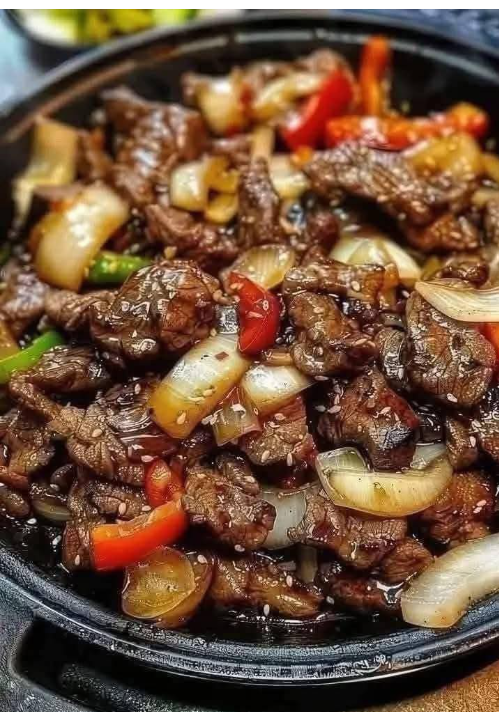
Chinese pepper steak with onions is a classic stir-fry that delivers bold flavor, tender beef, and crisp vegetables in one satisfying dish. This recipe combines juicy slices of beef with sweet onions and colorful bell peppers, all coated in a glossy, savory sauce that clings to every bite. It is quick enough for a busy weeknight yet flavorful enough to feel like a special homemade takeout-style meal.
What makes Chinese pepper steak with onions so popular is its balance. The beef is rich and savory, the peppers add freshness and crunch, and the onions bring natural sweetness that rounds everything out. The sauce ties it all together with salty, slightly sweet, and umami notes that make the dish incredibly comforting. Served over steamed rice or noodles, it becomes a complete and filling meal that everyone at the table will enjoy.
I first learned to appreciate Chinese pepper steak with onions during evenings when I wanted something fast but deeply satisfying. With just one pan and a handful of pantry staples, the kitchen would fill with the aroma of garlic, ginger, and sizzling beef in minutes. Over time, this dish became a dependable favorite because it always delivers big flavor without complicated steps or long cooking times.
Why Chinese Pepper Steak With Onions Is So Popular
A Perfect Combination of Texture
Chinese pepper steak with onions stands out because of its contrast in textures. The beef is sliced thinly against the grain, which keeps it tender and juicy when cooked quickly. The bell peppers remain slightly crisp, while the onions soften just enough to become sweet and fragrant.
This balance keeps the dish exciting to eat. Every forkful includes tender meat, crisp vegetables, and a silky sauce that coats everything evenly. Because nothing is overcooked, the dish feels fresh and lively rather than heavy.
Stir-frying at high heat ensures that the ingredients cook quickly and evenly, preserving both flavor and texture.
Bold Yet Balanced Flavors
The flavor of Chinese pepper steak with onions comes from a carefully balanced sauce. Soy sauce provides saltiness, oyster sauce adds depth, hoisin sauce brings sweetness, and rice vinegar offers a gentle tang. A touch of sugar smooths everything out without making the dish overly sweet.
Garlic and ginger form the aromatic base, infusing the oil with warmth and fragrance. Together, these ingredients create a sauce that tastes complex even though it comes together quickly.
Because the sauce is well-balanced, it enhances the beef and vegetables rather than overpowering them.
Choosing the Right Ingredients
Best Cuts of Beef to Use
For Chinese pepper steak with onions, flank steak and sirloin are ideal choices. Both cuts are flavorful and become tender when sliced thinly against the grain.
Cutting against the grain shortens the muscle fibers, which makes the beef easier to chew. This step is essential for achieving the tender texture that defines a good pepper steak.
Marinating the beef briefly allows it to absorb flavor and stay juicy during cooking.
Vegetables That Work Perfectly
Bell peppers and onions are the heart of this dish. Using both red and green peppers adds color and a mix of sweetness and slight bitterness. Onions soften as they cook, adding a mellow sweetness that balances the savory sauce.
Cutting the vegetables into uniform slices ensures even cooking. This step keeps everything ready at the same time, which is important in a fast stir-fry.
Preparing the Beef for Maximum Tenderness
Slicing and Marinating Properly
Thin slicing is key to success with Chinese pepper steak with onions. The beef should be sliced into strips that cook quickly without drying out.
Marinating the beef with soy sauce, oyster sauce, hoisin sauce, rice vinegar, and sugar adds flavor while helping tenderize the meat. Even a short marinating time makes a noticeable difference.
Allowing the beef to rest at room temperature briefly before cooking helps it sear more evenly.
Cooking the Beef in Batches
Cooking the beef in batches prevents overcrowding the pan. When too much beef is added at once, it steams instead of sears.
Searing the beef quickly over medium-high heat locks in juices and creates a rich, browned exterior. Removing it from the pan once browned prevents overcooking while the vegetables are prepared.
Ingredients
Equipment
Method
- Marinate sliced beef with soy sauce, rice vinegar, oyster sauce, hoisin sauce, and sugar.
- Heat oil in a skillet and stir-fry beef in batches until browned, then remove.
- Add onions, peppers, garlic, and ginger to the pan and stir-fry until tender-crisp.
- Return beef to the pan and add cornstarch slurry.
- Cook until sauce thickens and coats the beef and vegetables evenly.
Nutrition
Notes
Tried this recipe?
Let us know how it was!Building Flavor With Vegetables and Aromatics
Stir-Frying the Vegetables
Once the beef is removed, the vegetables go into the same pan. This step allows them to absorb the flavorful browned bits left behind by the beef.
Stir-frying the onions and peppers for just a few minutes keeps them tender-crisp. This texture contrasts beautifully with the tender beef.
Garlic and Ginger as the Flavor Base
Adding garlic and ginger to the vegetables infuses the oil with aromatic flavor. Cooking them briefly prevents bitterness while releasing their fragrance.
These aromatics are essential to the classic taste of Chinese pepper steak with onions.
Bringing the Dish Together
Thickening the Sauce
The cornstarch slurry is what gives Chinese pepper steak with onions its signature glossy sauce. Adding it at the end allows the sauce to thicken quickly and coat the beef and vegetables evenly.
Stirring constantly as the sauce thickens prevents lumps and ensures a smooth finish.
Final Seasoning and Balance
Once everything is combined, tasting and adjusting seasoning is important. A small pinch of salt or pepper may be needed, depending on the saltiness of the sauces used.
The final dish should taste savory, slightly sweet, and well-rounded.
Serving Suggestions
Best Ways to Serve
Chinese pepper steak with onions is best served hot over steamed white rice. The rice absorbs the flavorful sauce and completes the meal.
It also pairs well with noodles for a heartier option. Either way, the dish feels satisfying and complete.
Simple Garnishes
A light sprinkle of sliced green onions or sesame seeds adds visual appeal and a hint of freshness without overpowering the dish.
Customizing the Recipe
Easy Variations
You can add mushrooms, snap peas, or broccoli for extra vegetables. These additions blend well with the sauce and add variety.
For a spicier version, a pinch of crushed red pepper or a drizzle of chili oil works beautifully.
Making It Your Own
This recipe is flexible and forgiving. Adjust sauce ratios slightly to suit your taste while keeping the core flavors intact.
Storage and Reheating Tips
Storing Leftovers
Store leftovers in an airtight container in the refrigerator for up to three days. The flavors continue to develop, making leftovers just as enjoyable.
Reheating Properly
Reheat gently in a skillet or microwave until warmed through. Adding a splash of water helps loosen the sauce if needed.
Common Mistakes to Avoid
Overcooking the Beef
Overcooked beef becomes tough. Always remove it from the pan once browned.
Skipping the Slurry
The cornstarch slurry is essential for the proper sauce texture. Without it, the dish will be watery.
Frequently Asked Questions
Can I use a different cut of beef?
Yes, but choose a cut suitable for quick cooking.
Do I need a wok?
No, a large skillet works well.
Can I make this ahead of time?
Yes, but it is best fresh.
Is this dish spicy?
No, but you can add heat if desired.
Can I double the recipe?
Yes, cook the beef in batches for best results.
Conclusion
Chinese pepper steak with onions is a timeless stir-fry that delivers bold flavor, satisfying texture, and comforting familiarity. With tender beef, crisp vegetables, and a glossy savory sauce, it is a recipe that fits easily into busy schedules while still feeling special. Once you make it, this dish quickly becomes a dependable favorite you will return to again and again.
Leave a Reply