









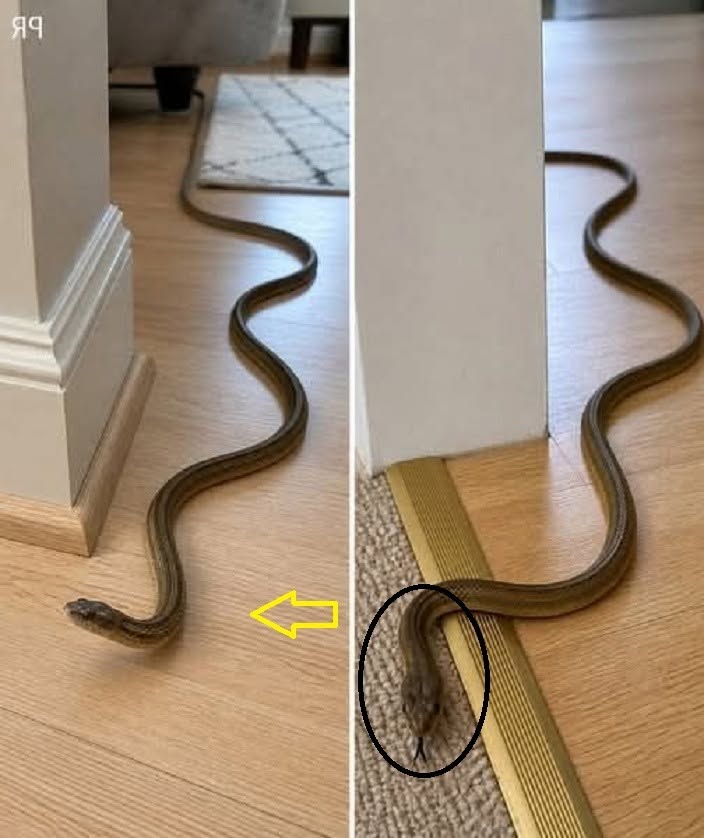
The answer depends on which lens you choose to view the situation through.
From a scientific perspective, snakes enter homes for very understandable reasons involving food, shelter, temperature, and survival.
From a symbolic perspective, many cultures interpret snakes as messengers of transformation, wisdom, healing, protection, and personal growth.
Let’s explore both viewpoints while separating fact from folklore and offering practical guidance for anyone who encounters a snake indoors.
Why Snakes Have Fascinated Humans for Thousands of Years
Very few animals have inspired as much symbolism as snakes.
Throughout history, snakes have appeared in:
- Ancient Egyptian mythology
- Greek medicine and philosophy
- Hindu spiritual traditions
- Indigenous folklore
- African cultural beliefs
- Celtic legends
- Religious texts around the world
Part of this fascination comes from the snake’s unique biology.
Unlike most animals, snakes periodically shed their skin.
This process allows them to grow, heal, and renew themselves.
Because of this remarkable ability, many cultures began associating snakes with transformation and rebirth.
Over time, snakes became powerful symbols representing life’s constant cycles of change.
The Symbolism of Snake Shedding
One of the most common symbolic interpretations of snakes revolves around renewal.
When a snake sheds its skin, the old layer is left behind while a fresh layer emerges beneath it.
To many observers, this appears almost magical.
As a result, snakes became symbols of:
- Personal growth
- Emotional healing
- Transformation
- New beginnings
- Spiritual awakening
- Letting go of the past
Many modern spiritual traditions continue to use snake imagery when discussing major life transitions.
For some people, seeing a snake indoors feels like a reminder that change may be approaching.
Whether or not one believes in symbolism, the metaphor remains powerful.
Growth often requires leaving something behind.
Interpretation #1: A Sign of Personal Transformation
Perhaps the most widespread symbolic belief is that a snake entering your home represents personal transformation.
The home often symbolizes the self.
Therefore, a snake crossing that boundary is sometimes interpreted as change entering your life.
People who hold this belief may associate the encounter with:
- Career changes
- Relationship transitions
- Emotional healing
- New opportunities
- Personal development
The appearance of a snake may encourage reflection.
Questions commonly associated with this symbolism include:
- What am I outgrowing?
- What am I resisting?
- What chapter of my life is ending?
- What new beginning is waiting for me?
Of course, these are symbolic interpretations rather than scientific conclusions.
Nevertheless, many people find value in reflecting on life’s transitions when unusual events capture their attention.
Interpretation #2: Hidden Wisdom Is Emerging
Across many ancient traditions, snakes symbolize wisdom and knowledge.
One famous example appears in Greek mythology.
The Rod of Asclepius, a staff wrapped by a serpent, remains one of the most recognized symbols of medicine today.
The snake became associated with healing and knowledge because of its perceived connection to renewal and survival.
Many traditions suggest that seeing a snake may symbolize:
- New understanding
- Hidden truths becoming visible
- Increased self-awareness
- Deeper intuition
- Learning through experience
Whether viewed literally or metaphorically, the symbolism encourages thoughtful observation rather than immediate reaction.
Interpretation #3: A Message to Trust Your Instincts
Snakes often move quietly and deliberately.
Because of this, they have become symbols of intuition and awareness.
Some spiritual traditions suggest that a snake encounter serves as a reminder to:
- Slow down
- Pay attention
- Trust your judgment
- Observe before reacting
- Listen to inner wisdom
Interestingly, this symbolic lesson aligns surprisingly well with practical advice.
If you encounter a snake, remaining calm and observant is indeed one of the safest responses.
Interpretation #4: Protection and Guardianship
Not all cultures view snakes as threatening.
In some traditions, snakes are considered protectors.
Certain African, Indigenous American, and Asian beliefs associate snakes with guardianship and ancestral protection.
According to these interpretations, a snake entering a home may symbolize:
- Protection from harm
- Spiritual guidance
- Household strength
- Resilience during challenges
Again, these beliefs are matters of tradition rather than scientific evidence.
Yet they demonstrate how differently cultures interpret the same animal.
Interpretation #5: New Opportunities Ahead
Another common folk belief links snakes with opportunity.
Because snakes are adaptable survivors, they often symbolize resourcefulness and growth.
Some people interpret an unexpected snake encounter as a reminder to remain open to:
- Career opportunities
- Financial improvements
- New relationships
- Creative breakthroughs
- Personal achievements
While there is no scientific basis for predicting future events from snake appearances, the symbolism often encourages optimism and openness to change.
What Science Says About Snakes Entering Homes
Folklore can be fascinating.
However, biology offers a much more practical explanation.
Snakes do not enter homes to deliver messages.
They enter because they are searching for resources.
Like all wildlife, snakes are trying to survive.
Their decisions are driven by environmental needs rather than symbolic intentions.
The Most Common Reason: Food
Food is one of the biggest reasons snakes enter human structures.
Many snake species feed on:
- Mice
- Rats
- Small birds
- Insects
- Lizards
- Frogs
If rodents have found their way into your home, a snake may follow.
In this sense, the snake is responding to an existing food source.
Ironically, finding a snake indoors sometimes reveals another problem—an unnoticed rodent population.
Searching for Water
During dry conditions, snakes may seek moisture.
Leaky pipes, damp crawl spaces, basements, and bathrooms can attract wildlife searching for water.
Homes provide stable environments that often remain cooler and more humid than outdoor conditions.
Looking for Shelter
Snakes prefer safe hiding places.
Your home may unintentionally provide:
- Dark corners
- Wall voids
- Crawl spaces
- Storage areas
- Garages
- Utility rooms
These locations can mimic natural shelters found under logs, rocks, and vegetation.
Escaping Extreme Temperatures
Because snakes are ectothermic, they rely on external temperatures to regulate body heat.
When outdoor temperatures become:
- Extremely hot
- Extremely cold
- Excessively wet
snakes may seek temporary refuge indoors.
This behavior is about survival rather than aggression.
Following Entry Points
Snakes can fit through surprisingly small openings.
Common entry routes include:
- Foundation cracks
- Gaps under doors
- Utility openings
- Damaged vents
- Crawl-space entrances
Many homeowners are surprised to discover how small an opening is needed for entry.
Are Most Indoor Snakes Dangerous?
The reassuring news is that most snakes encountered around homes are not dangerous.
In many regions, the majority of snakes are nonvenomous.
Common examples include:
- Rat snakes
- Garter snakes
- King snakes
- Corn snakes
- Ribbon snakes
These species often provide ecological benefits by controlling rodents and other pests.
However, venomous species do exist in certain areas.
Because accurate identification can be difficult, it is safest to assume any unknown snake should be treated cautiously.
What To Do If You Find a Snake in Your Home
The safest response is also the simplest.
Step 1: Stay Calm
Most snake bites occur when people attempt to handle, corner, or kill the snake.
Remaining calm significantly reduces risk.
Step 2: Maintain Distance
Give the snake space.
Most snakes prefer escape over confrontation.
Step 3: Isolate the Area
If possible, close doors to limit movement into other parts of the home.
Step 4: Observe From a Safe Distance
Take note of:
- Size
- Color
- Pattern
- Location
Photos taken from a safe distance may assist professionals.
Step 5: Contact Professionals
Wildlife control specialists, animal control officers, or local wildlife agencies can safely remove the snake.
Professional removal protects both people and animals.
What Not To Do
Avoid these common mistakes:
Do Not Attempt to Kill the Snake
Many bites occur during attempts to kill or capture snakes.
Do Not Use Glue Traps
Glue traps cause prolonged suffering and may injure non-target wildlife.
Do Not Corner the Animal
A frightened snake is more likely to defend itself.
Do Not Assume Identification
Even experienced observers can misidentify species.
When uncertain, treat every snake with caution.
Why Snakes Matter to Ecosystems
Despite widespread fear, snakes play important ecological roles.
They help regulate populations of:
- Rodents
- Insects
- Small mammals
Without snakes, pest populations could increase dramatically.
Many farmers and gardeners actually benefit from nearby snake populations.
Healthy ecosystems depend on predators and prey working together in balance.
How to Reduce Future Encounters
Preventing snake entry is usually straightforward.
Seal Entry Points
Inspect your home for:
- Cracks
- Foundation gaps
- Utility openings
- Damaged screens
Control Rodents
Reducing prey reduces snake attraction.
Remove Outdoor Clutter
Wood piles, debris, and dense vegetation provide shelter.
Maintain Landscaping
Trim grass and vegetation near structures.
Eliminate Standing Water
Reducing moisture discourages many wildlife visitors.
Bridging Symbolism and Science
Perhaps the most interesting aspect of snake encounters is that symbolism and science do not necessarily have to compete.
Science explains why the snake arrived.
Symbolism explores what the experience means to you personally.
One addresses biology.
The other addresses reflection.
A person can appreciate the ecological reality of snakes while also finding personal meaning in an unexpected encounter.
Both perspectives invite awareness.
Both encourage observation.
And both remind us that the natural world remains deeply connected to our daily lives.
Final Thoughts
Finding a snake in your home can be startling, memorable, and sometimes frightening.
From a practical standpoint, snakes enter homes seeking food, water, shelter, or protection from harsh weather. Most encounters involve nonvenomous species that are simply trying to survive.
From a symbolic standpoint, many cultures associate snakes with transformation, wisdom, healing, protection, intuition, and new beginnings.
Whether you interpret the encounter through science, folklore, or a combination of both, the most important response is the same:
Stay calm.
Respect the animal.
Protect your safety.
Seek professional assistance when necessary.
And perhaps take a moment to appreciate the remarkable creature that unexpectedly crossed your path.
Sometimes a snake is simply a snake.
And sometimes an unexpected encounter reminds us to pay closer attention—to nature, to our surroundings, and perhaps even to ourselves.
Leave a Reply