






Step-by-Step Guide to Making Wonton Wraps
Mixing the Dough
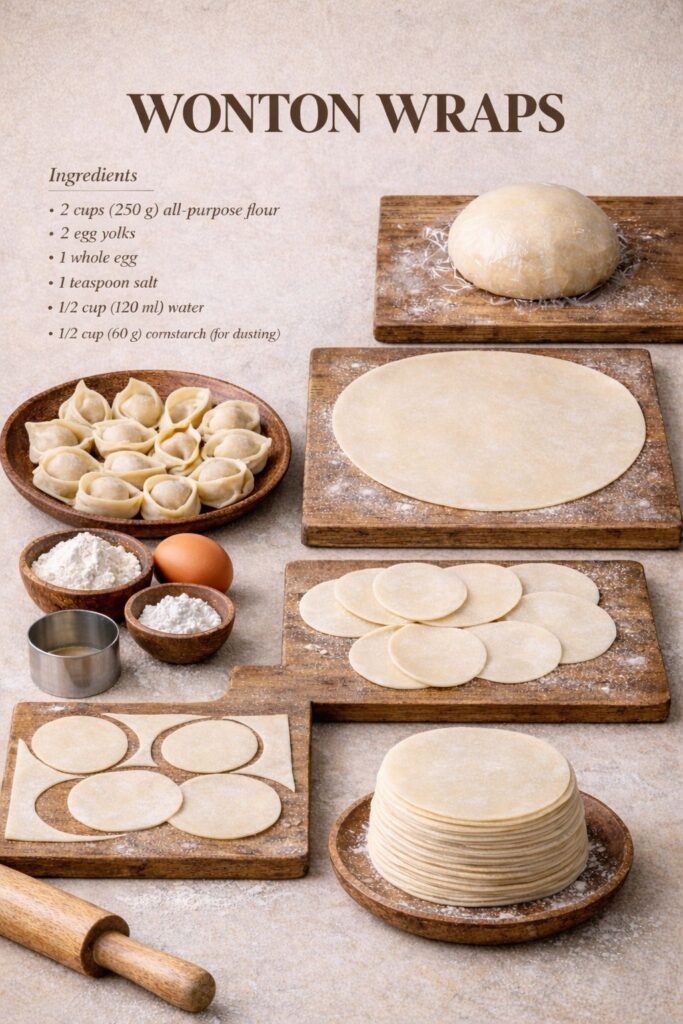
Start by adding flour and salt to a large mixing bowl. Stir them together so the salt distributes evenly.
Next, create a well in the center of the flour mixture.
Add the egg yolks, whole egg, and water into the well. Using a fork or your hands, begin mixing the ingredients together.
Gradually incorporate the flour from the edges of the bowl until a rough dough forms.
The dough may appear slightly shaggy at first, but it will smooth out during kneading.
Kneading the Dough
Transfer the dough to a lightly floured surface.
Knead it for about 8 to 10 minutes. Press, fold, and stretch the dough repeatedly until it becomes smooth and firm.
Proper kneading develops gluten, which gives the wrappers strength and elasticity.
If the dough sticks to your hands, sprinkle a small amount of flour onto the surface.
Once kneaded, shape the dough into a smooth ball.
Resting and Rolling the Dough
Resting the Dough
After kneading, cover the dough with a towel or plastic wrap and allow it to rest for about 30 minutes.
This resting period relaxes the gluten, making the dough easier to roll thin without shrinking.
Additionally, resting allows moisture to distribute evenly throughout the dough.
When the dough finishes resting, it should feel slightly softer and more flexible.
Rolling and Cutting the Wrappers
Lightly flour your work surface and rolling pin.
Roll the dough as thin as possible, ideally about 1–2 millimeters thick. Thin dough creates delicate wrappers that cook quickly.
Once rolled, use a knife or pizza cutter to cut the dough into small squares or circles.
Squares work well for traditional wontons, while circles are ideal for dumplings.
Storing and Using the Wrappers
Dusting with Cornstarch
Before stacking the wrappers, dust them lightly with cornstarch.
Cornstarch prevents the wrappers from sticking together while keeping them dry and easy to separate.
Stack the wrappers gently and keep them covered with a cloth or plastic wrap to prevent drying.
Short-Term Storage
Fresh wonton wraps can be used immediately for dumplings, wontons, or fried appetizers.
If you plan to use them later the same day, store them in the refrigerator in an airtight container.
For longer storage, place parchment paper between layers and freeze the wrappers.
Frozen wrappers can last for several weeks and thaw quickly when needed.
Frequently Asked Questions
Can I make wonton wraps without eggs?
Yes. Some recipes use only flour, water, and salt. However, eggs add elasticity and improve texture.
How thin should the wrappers be?
Ideally, they should be about 1–2 millimeters thick so they cook quickly and remain delicate.
Can I use a pasta machine to roll the dough?
Yes. A pasta machine works very well for achieving evenly thin dough.
How do I keep wrappers from drying out?
Keep them covered with plastic wrap or a damp cloth while working.
Can these wrappers be used for dumplings?
Absolutely. They work perfectly for wontons, dumplings, potstickers, and other filled dishes.
Conclusion
Wonton Wraps offer a simple yet versatile dough that transforms flour, eggs, and water into delicate wrappers for countless dumpling dishes. With a bit of kneading and careful rolling, you can create fresh wrappers that rival store-bought versions.
Because the recipe allows complete control over thickness and size, it adapts easily to many cooking styles and fillings. Whether boiled in soup, steamed in dumplings, or fried into crispy appetizers, these homemade wrappers deliver excellent texture and flavor.
Once you experience the freshness and flexibility of homemade wonton wraps, they may quickly become a staple in your kitchen.
Leave a Reply