







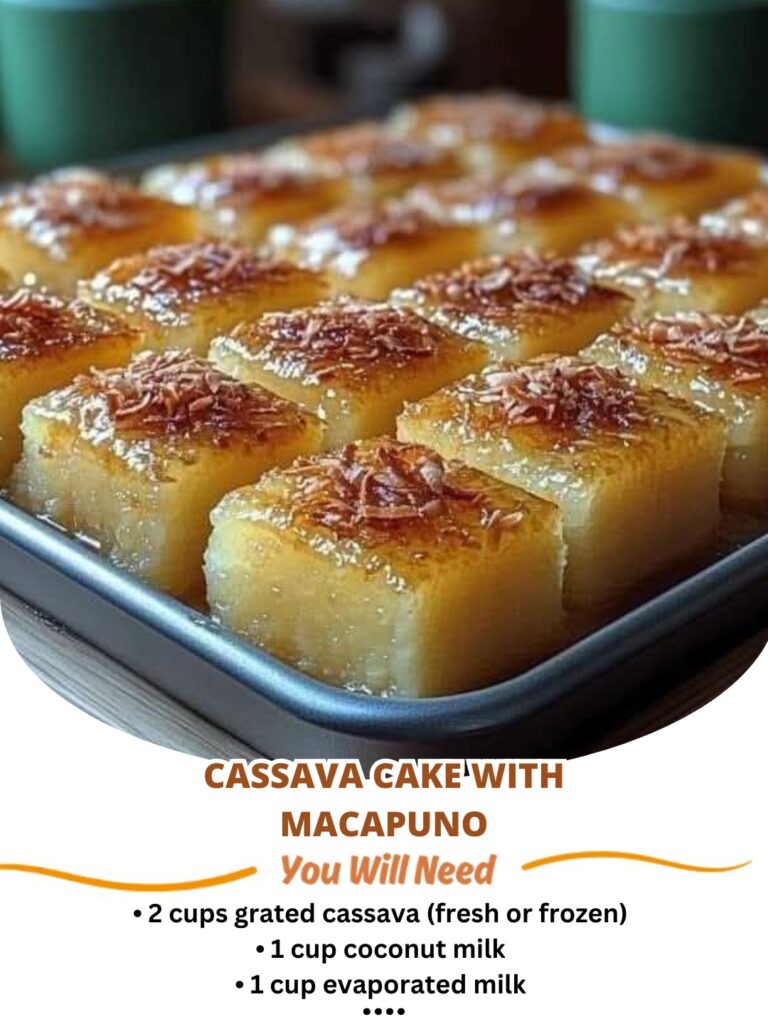
Cassava Cake with Macapuno is a classic Filipino dessert that beautifully showcases the rich flavors of coconut and cassava. Dense yet tender, sweet but balanced, this beloved kakanin features a chewy cassava base layered with a silky custard topping and studded with strands of sweet macapuno (preserved young coconut). Every bite delivers comfort, nostalgia, and tropical indulgence.
Popular at birthdays, fiestas, holidays, and family gatherings, cassava cake is one of those desserts that always disappears fast from the table. This version, enhanced with macapuno, takes the traditional recipe to another level—extra creamy, extra special, and irresistibly satisfying.
Cassava Cake with Macapuno
Nutrition
Tried this recipe?
Let us know how it was!What Makes Cassava Cake with Macapuno Special?
- Naturally gluten-free
- Rich coconut flavor from coconut milk and macapuno
- Chewy base with a creamy custard topping
- Easy to make with simple ingredients
- Perfect for celebrations or everyday dessert cravings
Ingredients You’ll Need
For the Cassava Base Layer
- 4 cups grated cassava (fresh or frozen, thawed and well-drained)
- 1 can (13.5 oz) coconut milk
- 1 cup condensed milk
- 1/2 cup granulated sugar
- 1/2 cup unsalted butter, melted
- 3 large eggs, lightly beaten
- 1 teaspoon vanilla extract
- 1 cup macapuno strings (sweetened preserved young coconut)
For the Custard Topping
- 1 can (13.5 oz) coconut milk
- 1/2 cup evaporated milk
- 1/2 cup granulated sugar
- 3 large egg yolks, lightly beaten
- 1 teaspoon vanilla extract
- Extra macapuno strings, for garnish
Step-by-Step Instructions
Step 1: Preheat and Prepare
Preheat your oven to 350°F (175°C). Grease a 9×13-inch baking pan or line it with parchment paper for easy removal.
Step 2: Make the Cassava Base
In a large bowl, combine the grated cassava, coconut milk, condensed milk, sugar, melted butter, eggs, and vanilla extract. Mix thoroughly until smooth and evenly blended.
Fold in the macapuno strings, reserving a small amount for topping if desired. Pour the mixture into the prepared baking pan and spread evenly.
Step 3: Bake the Base Layer
Bake for 45–50 minutes, or until the edges are set and the center is slightly firm but still moist.
Step 4: Prepare the Custard Topping
While the base is baking, combine coconut milk, evaporated milk, sugar, egg yolks, and vanilla extract in a saucepan. Cook over low heat, stirring constantly, until the mixture thickens slightly. Do not boil.
Step 5: Add the Topping
Remove the partially baked cassava cake from the oven. Carefully pour the custard topping over the base, spreading evenly. Add extra macapuno on top if desired.
Step 6: Final Bake
Return the pan to the oven and bake for an additional 20–25 minutes, or until the topping is set and lightly golden.
Step 7: Cool and Serve
Allow the cassava cake to cool completely before slicing. This helps the layers set properly and improves texture.
Tips for Best Results
- Drain frozen cassava well to avoid excess moisture
- Stir custard constantly to prevent curdling
- Let the cake cool fully before cutting for clean slices
- For a lightly caramelized top, broil for 1–2 minutes at the end
Frequently Asked Questions (FAQs)
Can I use frozen grated cassava?
Yes. Frozen cassava works perfectly—just thaw and squeeze out excess liquid before using.
What is macapuno, and can I skip it?
Macapuno is preserved young coconut with a soft, jelly-like texture. You can skip it, but it adds unique flavor and richness.
How do I store cassava cake?
Store in an airtight container in the refrigerator for up to 4 days.
Can cassava cake be frozen?
Yes. Wrap slices tightly and freeze for up to 2 months. Thaw in the refrigerator before reheating.
Is cassava cake gluten-free?
Yes, cassava cake is naturally gluten-free.
Conclusion
Cassava Cake with Macapuno is a timeless Filipino dessert that never fails to impress. With its chewy cassava base, creamy custard topping, and sweet coconut strands, it’s the perfect balance of texture and flavor. Whether you’re serving it at a festive celebration or enjoying it as an afternoon treat, this dessert delivers comfort, tradition, and indulgence in every slice.
Once you try this recipe, it’s sure to become a favorite on your dessert table—rich, nostalgic, and unmistakably Filipino.
Leave a Reply