







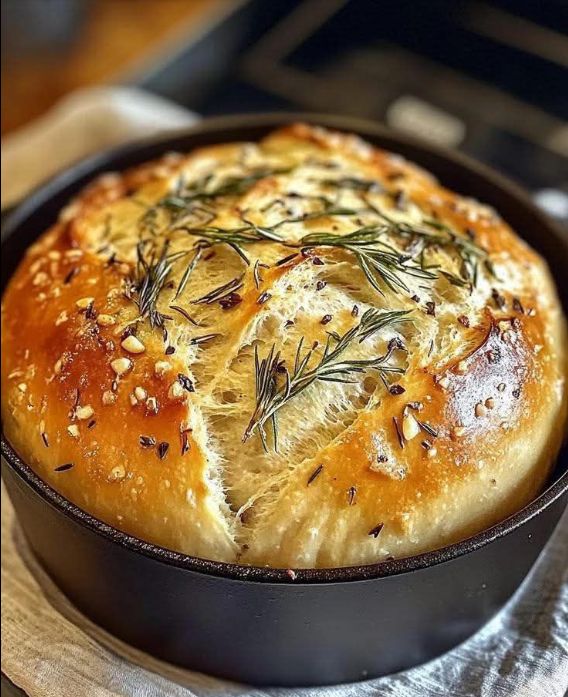
Rustic Rosemary Artisan Bread is the kind of loaf that instantly transforms your kitchen into something special. With its crackly golden crust, soft and chewy interior, and the unmistakable aroma of fresh rosemary, this bread feels both comforting and impressive at the same time. Rustic Rosemary Artisan Bread is perfect for dipping into olive oil, serving alongside soups and stews, or enjoying warm with a little butter and flaky salt.
The first time I made this bread, it was on a quiet evening when I wanted something simple but rewarding. I mixed the dough, covered the bowl, and let time do the work overnight. By the next morning, the dough was airy and alive, and once it hit the hot pan in the oven, the smell of rosemary and fresh bread filled the house. Slicing into that loaf felt like a small victory. Ever since, Rustic Rosemary Artisan Bread has been my go-to recipe when I want homemade bread without complicated steps.
Why Rustic Rosemary Artisan Bread Is So Special
A Long Rise for Big Flavor
Rustic Rosemary Artisan Bread relies on time rather than heavy kneading. The long, slow rise allows the yeast to develop flavor naturally, creating a deeper, more complex taste.
This overnight fermentation also improves texture. The crumb becomes airy and chewy, while the crust bakes up beautifully crisp.
Because the dough does most of the work on its own, this method is ideal for beginners who want impressive results with minimal effort.
Simple Ingredients, Classic Results
This bread uses pantry staples: flour, yeast, salt, sugar, water, olive oil, and fresh rosemary. Each ingredient plays a clear role, and nothing feels unnecessary.
The rosemary adds an earthy, aromatic note that perfumes the entire loaf. Olive oil enriches the dough and contributes to the golden crust.
The result is a loaf that feels rustic, hearty, and timeless.
Understanding the Ingredients
Flour as the Foundation
All-purpose flour works perfectly for Rustic Rosemary Artisan Bread. It provides enough structure for a chewy crumb while remaining easy to handle.
Measuring the flour accurately helps maintain the right dough hydration. Too much flour can make the loaf dense, while too little can make it overly sticky.
A lightly sticky dough is exactly what you want.
Yeast and the Power of Time
Instant yeast jumpstarts fermentation, even with a long rise. Using a small amount allows the dough to develop slowly without overproofing.
The extended rise time is what creates that signature artisan flavor. Rushing this step reduces depth and complexity.
Patience is rewarded with better taste and texture.
Rosemary for Aroma and Flavor
Fresh rosemary is essential for this recipe. Its oils release during baking, infusing the loaf with a savory, herbal aroma.
Chopping the rosemary finely ensures even distribution throughout the dough. Extra sprigs on top add visual appeal and reinforce flavor.
Rosemary pairs beautifully with olive oil and bread’s natural sweetness.
Olive Oil and Seasoning
Olive oil adds richness and helps create a tender crumb. It also enhances browning, giving the loaf its golden finish.
A sprinkle of coarse sea salt on top adds texture and highlights the bread’s flavor without overpowering it.
These finishing touches make the loaf feel bakery-worthy.
Ingredients
Equipment
Method
- In a bowl, mix flour, salt, sugar, yeast, and rosemary. Add water and stir until a sticky dough forms.
- Cover and let rise at room temperature for 8–12 hours.
- Gently shape dough into a round loaf on a floured surface.
- Preheat oven and cast-iron skillet to 450°F (230°C).
- Transfer dough to skillet, drizzle with olive oil, and sprinkle with rosemary and sea salt.
- Cover and bake for 30 minutes. Uncover and bake 10–15 minutes until golden.
- Cool slightly before slicing and serving.
Nutrition
Notes
Tried this recipe?
Let us know how it was!Making the Dough
Mixing Without Kneading
Rustic Rosemary Artisan Bread requires minimal mixing. Combining the dry ingredients first ensures even distribution of yeast and salt.
Adding warm water gradually brings the dough together into a sticky mass. There is no need to knead extensively.
This hands-off approach makes the recipe accessible and forgiving.
The Overnight Rise
Covering the bowl and letting the dough rest for 8 to 12 hours allows fermentation to work slowly. The dough will double or even triple in size.
During this time, bubbles form throughout, creating the open crumb typical of artisan bread.
Room temperature is usually sufficient, making this step easy to manage.
Shaping and Baking
Gentle Shaping
After rising, the dough should be handled gently. Lightly flouring your hands and surface prevents sticking without adding excess flour.
Shaping the dough into a loose round preserves the air bubbles developed during fermentation.
Overworking the dough can deflate it, so less is more.
Baking in a Hot Skillet or Dutch Oven
Preheating the skillet or Dutch oven creates instant heat and steam when the dough is added. This helps the bread spring upward and form a crust.
Covering the bread during the first part of baking traps steam, mimicking a professional bread oven.
Removing the lid later allows the crust to brown and crisp.
Knowing When It’s Done
The bread is ready when the crust is deeply golden and sounds hollow when tapped.
Cooling the loaf slightly before slicing allows the interior to set properly.
Resisting the urge to cut too soon improves texture.
Serving Rustic Rosemary Artisan Bread
Best Ways to Enjoy It
This bread shines when served warm with olive oil or butter. It also pairs beautifully with soups, roasted vegetables, and pasta dishes.
Sliced thick, it makes excellent toast or sandwich bread.
Its flavor is strong enough to stand alone but subtle enough to complement many meals.
Storage Tips
Store the bread loosely wrapped at room temperature for up to two days.
For longer storage, slice and freeze. Reheating restores much of the crust’s crispness.
Variations to Try
Cheese and Herb Additions
Adding grated Parmesan or cheddar creates a richer loaf. Mixing in other herbs like thyme or oregano changes the flavor profile.
These variations keep the recipe exciting while maintaining its rustic character.
Whole Wheat Option
Substituting part of the flour with whole wheat adds nuttiness and texture.
Adjust water slightly, as whole wheat absorbs more moisture.
Frequently Asked Questions
Do I need a Dutch oven?
A cast-iron skillet works just as well.
Why is my dough so sticky?
That is normal and helps create an open crumb.
Can I shorten the rise time?
Longer rises produce better flavor, but shorter rises still work.
Can I use dried rosemary?
Fresh rosemary gives the best aroma, but dried can be used in smaller amounts.
Why is my crust too hard?
Overbaking or too much flour can cause this.
Conclusion
Rustic Rosemary Artisan Bread proves that homemade bread does not need to be complicated to be impressive. With minimal effort and simple ingredients, this loaf delivers incredible flavor, texture, and aroma. Whether served with dinner or enjoyed on its own, Rustic Rosemary Artisan Bread brings warmth and satisfaction to any table. Once you bake it, this recipe quickly becomes one you return to whenever you crave real, homemade bread.
Leave a Reply